
Year 2 : Owl Class
Welcome to our Year 2, Owl Class page
Class Teacher: Miss K Fairbrother
Support Staff: Miss D Mitchell
PE Days: Tuesday and Thursday
In Owl Class we work hard on embedding our skills from EYFS and Year 1 and further build upon our foundations before we head into Year 3 and Key Stage 2.
Please click on the link below for all the information on what we are learning about this half-term.
Spotlight learning
This week 05/10/26 - 09/10/26: -
Year 2
We have been writing our dragon reports. Writing about what they look like, where they live and what their special abilities are. The children have enjoyed using their imagination to write 'facts' about them.
In Maths we have been counting forwards and backwards in 2s and 5s including finding missing numbers on a number track. We've counted in 10s also including when we start on any 2 digit number, understanding that only the tens change, not the ones!
In Foxes, we have started making our castles with a working drawbridge. It was a challenge to make them work but we persisted with them! Owls will start theirs shortly now that they have enough boxes.
In PSHE, we have been talking about friendship and how we should play with our friends and what it is to play fairly with others. We talked about the correct things to say to others when we are playing games.
28/09/26 - 02/10/26:-
Year 2
In Maths this week, they have been counting in 2s, 5s and 10s. Looking for patterns and creating number lines and number tracks.
In English, they have read a report about a rare rainbow dragon. The children will be thinking about a dragon to write their own report about.
In Geography, they have learnt how sugar is produced in the UK
and where it comes from. They looked at a variety of different products to see how many spoons of sugar they contained. Some foods were very surprising!
In PSHE, we have been thinking about what makes a good friend. We talked about qualities and made a friendship tower with the six qualities that each child felt were the most important to them.
In Science, they considered the questions 'Can paper be strong?' and worked together in groups to create bridges out of paper that would allow a toy car to pass over it without it collapsing. They used layers and folding to successfully make strong bridges!
21/09/26 - 25/09/26: -
Year 2
Maths: Year 2 have partitioning numbers in different ways using part-whole models and equipment to support them. They have also been counting in multiples of 10 on a number line and finding missing numbers.
English: We have been planning and writing instructions of how to trap our chosen mythical creatures this week using our model text ‘How to trap a Dragon’ by Pie Corbett
Science: The children investigated whether materials could change shape. They used wax, which they learnt was a solid, and understood that when it was heated up the particles are no longer tightly packed together, and they move to create a liquid. They put solid wax in moulds, we heated it, then the wax quickly cooled and had formed its new shape.
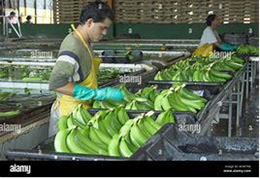
Geography: They have been learning about the export of fruit this week, in particular bananas, which is a popular fruit in the UK. They followed the harvesting of bananas from a plantation in Costa Rica and learnt the steps involved in the cleaning, inspecting, boxing up and shipping to the UK.
Cardboard boxes will still be needed for next week. Thank you!
14/09/26 - 18/09/26:-
Year 2
English: Year 2 have been learning the text 'How to trap a dragon' using Talk for Writing actions. They then started thinking about their own mythical creature that they could trap, and
they wrote about why. They decided what they would use to trap their creature and wrote a list of what you need.
Science: They considered the question: Are all fabrics waterproof? They tested a range of fabrics to see if they absorbed water then used wax crayon to make absorbent fabrics waterproof! Sometimes it didn't work so the children had to make sure their layer of wax was thick!
Geography: This week Year 2 look at the export of cheese from a dairy farm from Devon who exported their cheese all the way to Australia! They used maps to plot a route by boat and looked at the continents they would pass to get there.
DT: Year 2 have designed castles this week ready to make a castle next week which uses levers or hinges. Any box donations would be appreciated for this, cereal boxes are perfect, thank you!
07/09/26 - 11/09/26:-
Year 2
Maths: They have continued their work on place value, with a focus on comparing numbers e.g. 10+5 < 25 and then ordering numbers from smallest to greatest and greatest to smallest. They can talk about how many tens a number has to help them decide if it is smaller or greater.
English: After reading Jack and the Beanstalk last week, they have written some of their own settings for the top of the beanstalk. They drew their setting and thought about what adjectives they could use to describe it. Then, they wrote descriptive sentences using their senses.
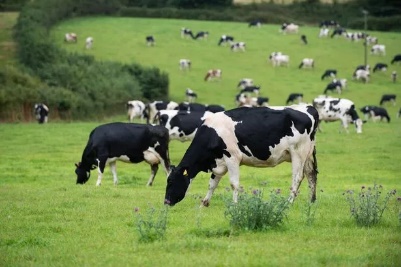
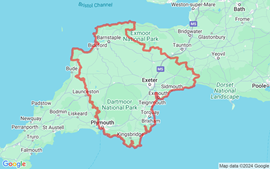
Geography: They were exploring the question 'Why are there so many dairy farms in Devon?' They looked at the area of Devon on a map and some pictures of the farming areas. They were identifying human features and physical features. They then looked at the differences in temperature, rainfall and sunshine compared the rest of the UK.
Science: They investigated the question 'Are hard materials absorbent?' and explored hard materials such as wood, metal, plastic and rock.
DT: They are exploring levers and hinges this week, they made a card which showed an egg hatching so used a hinge to open and close the egg.
Week 01/09/26 - 04/09/26: -
Year 2
In Maths Year 2 have been learning to understand the value of each digit in 2-digit numbers using base 10 equipment and part whole models. They have been comparing the numbers and deciding which numbers are greater or less.
In English they have read the traditional story Jack and the Beanstalk, created story maps to re-tell the story and have begun collecting adjectives to describe the setting of the castle.
In Science they tested absorbency of different types of paper to see which were the best for cleaning up spillages.
In Geography the children discussed where dairy products come from. They followed a farmer in Wales on a dairy farm who showed the process involved for milking cows, refrigerating the milk, collecting it to take to factories where it is pasteurised and bottled up to go the shops.